 Oral health
The importance of calcium for a healthy smile
Calcium is one of the fundamental minerals for the health of our organism and the development of many of the structures that compose it. ....


Oral lichen planus is a chronic inflammatory disorder affecting the mucous membranes inside the mouth.
This pathology is based on an autoimmune reaction, mediated by cytotoxic T lymphocytes directed against oral mucosal cells, for reasons that are not yet fully understood. However, there appear to be several predisposing or aggravating factors.
Oral lichen planus most commonly affects the inside of the cheeks and tongue bilaterally.
It may present as white spots or threads, reddened and inflamed areas of tissue or open sores. These lesions may cause burning, pain or other discomfort.
Oral lichen planus (or lichenoid stomatitis) is a benign inflammatory disease of the oral cavity.
It is a dermatological disease affecting the skin, genital mucosa and oral cavity mucosa, characterized by a recurrent pruritic inflammatory rash. The oral mucosa is affected in approximately 50 % of cases; oral lesions may appear without skin lesions.
Oral lichen planus can present in three different forms:
The causes of oral lichen planus are still unknown, but it is known that the inflammation is triggered by an immune-mediated attack on the mucosal cells of the mouth. This could indicate an underlying immune disorder, as well as genetic factors could be involved. However, to determine the exact etiology, more scientific evidence is needed.
One hypothesis holds that oral lichen planus lesions are associated with a genetic predisposition, linked in particular to Th1 cytokine polymorphisms, which facilitates the triggering of a T-cell immune response to an antigenic change induced in the epithelium.
The inflammation underlying oral lichen planus can be triggered by various chemical or biological agents and certain drugs, including β-blockers, NSAIDs, ACE inhibitors, sulfonylureas, antimalarials, penicillamine and thiazides.
Recently, associations with hepatitis C-related liver failure, primary biliary cirrhosis and other forms of hepatitis have been reported. Stress may also be involved in inducing manifestations that worsen or tend to recur. Suspected etiologic factors of oral lichen planus also include lesions in the mouth, infections and allergic reactions to materials used in dentistry. However, these causes have not been fully confirmed.
Anyone can develop oral lichen planus, but it is more common in middle-aged women, who are affected twice as often as men. However, oral lichen planus is rare in children.
Certain factors may increase the risk of developing oral lichen planus, such as having a disorder that lowers immunity or taking certain medications, although more scientific studies are needed to confirm this.
Oral lichen planus affects the mucous membranes of the mouth with lesions that have the following characteristics:
Oral lichen planus lesions may appear as:
Occasionally, a form of erosive lichen planus may appear in which the patient develops superficial oral ulcers, often painful and recurrent, which, if long-lasting, in some cases become malignant.
Oral lichen planus lesions may appear on the inside of the cheeks (most common site of involvement) or on:
White or threadlike lesions may not cause discomfort when they appear on the inner cheeks, but many patients experience increased sensitivity and report intolerance to acidic, spicy or strongly flavored drinks and foods. However, pain in the oral mucous membranes is uncommon.
Therefore, symptoms accompanying the presentation of lichen planus in the form of red or swollen spots and open sores may be:
The onset of oral lichen planus may be sudden or gradual. In either case, chronic evolution is frequent, so that periods of remission alternate with exacerbations of the disease.
Oral lichen planus is a chronic disease that cannot be cured, so treatment is primarily aimed at controlling symptoms and focuses on facilitating healing of severe lesions and reducing pain or other discomfort. The physician will monitor the disease to determine the appropriate treatment or, if necessary, discontinue treatment.
If oral lichen planus does not cause pain or discomfort and there are only white, soft lesions, no treatment may be necessary. For more severe symptoms, however, one or more of the following treatment options are usually indicated, which differ depending on the location and extent of the disease.
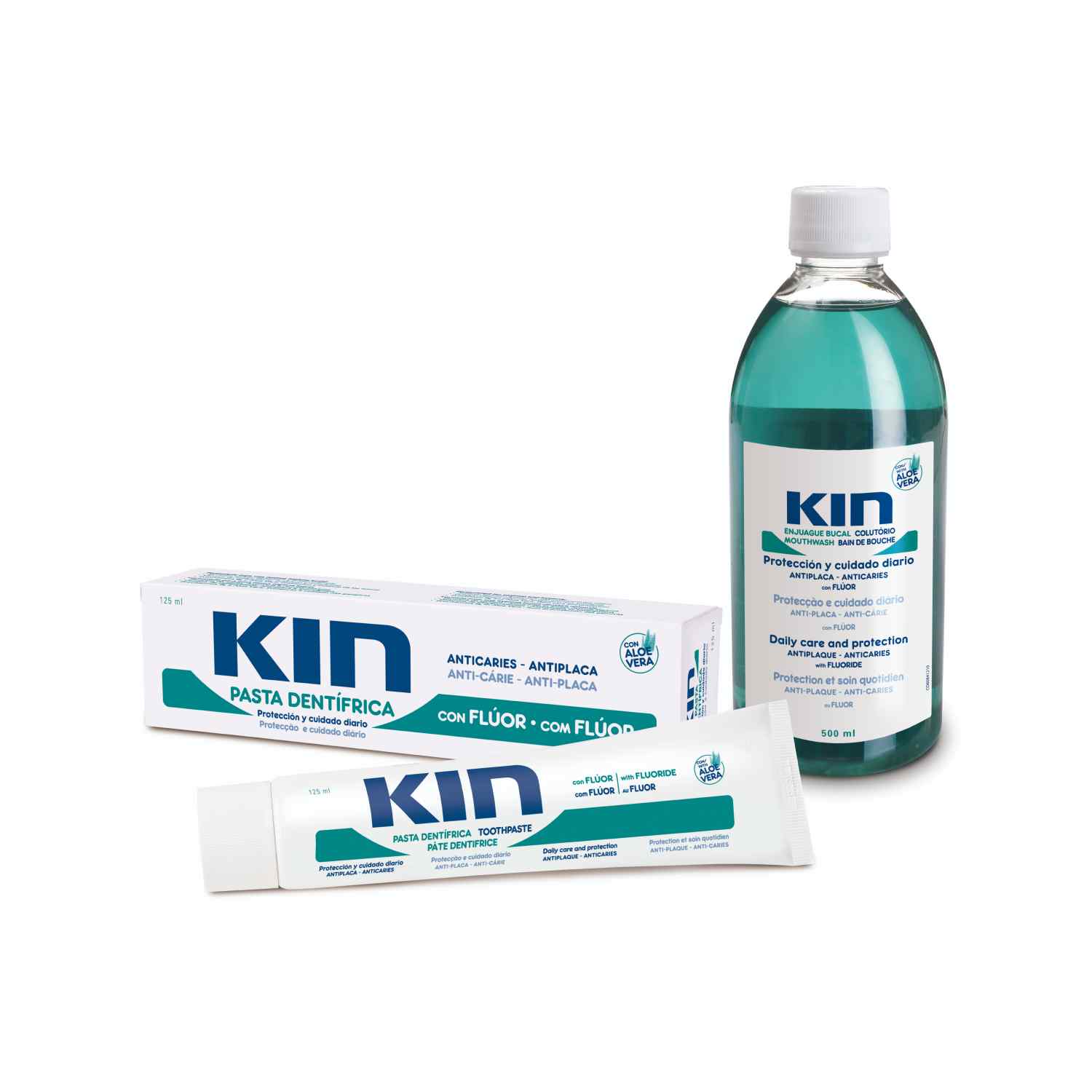
KIN
View productIf your doctor suspects that oral lichen planus may be related to a specific trigger, such as a drug, allergen or stress, he or she can advise on how to treat it. For example, he or she may indicate a change in medication, consult an allergist or dermatologist for further testing, or learn stress management techniques.
It is advisable to use topical gels that act as moisturizers for the oral mucosa and contain in their composition ingredients that favor tissue repair, such as aloe vera or hyaluronic acid.
In the case of large aphthous ulcers, the use of oral antiseptics such as chlorhexidine in the form of Mouthwash is recommended to reduce the risk of complications.
Immunomodulators such as corticosteroids (topical or injectable) and calcineurin inhibitors, always used locally, can be used to improve more severe lesions and reduce pain. However, their long-term effects are still under investigation.
Lidocaine may help relieve the symptoms of erosive ulcers. Other treatment options include systemic corticosteroids.
Erosive oral lichen planus may respond to oral dapsone, hydroxychloroquine or cyclosporine. Rinses with cyclosporine solutions and oral immunosuppressants may also be used.
There are no real guidelines to follow to reduce the incidence of lichen, mainly becausethe true cause is unknown ; however, assuming that predisposing factors may be many and interact with each other, some small lifestyle modifications may be helpful:
Avoid, in case of itching, aggravating the situation by repeated scratching.

Oral lichen planus most commonly affects the inside of the cheeks and tongue bilaterally. Oral lichen planus may present as white or sheet-like patches, reddened and inflamed areas of tissue, or open sores. These lesions may cause burning, pain or other discomfort.
Lichen planus usually heals spontaneously after one or two years, although it sometimes persists for longer, especially if the oral cavity is affected. Symptoms are recurrent in 20% of people. Prolonged treatment may be necessary when the rash appears.
A biopsy is usually performed. If lichen planus is diagnosed, laboratory tests to evaluate liver function and possible hepatitis B and C virus infection should be considered.
Oral health
Calcium is one of the fundamental minerals for the health of our organism and the development of many of the structures that compose it. ....
 Oral health
[et_pb_section admin_label="section"] [et_pb_row admin_label="row"] [et_pb_column type="4_4"][et_pb_text admin_label="Text"]Salivary pH plays a very important role in maintaining oral health. This substance, which is...
This pathology is based on an autoimmune reaction, mediated by cytotoxic T lymphocytes directed against the cells of the oral mucosa, for reasons that are still...